
Jodrell Bank Observatory faces closure as UK government slashes funding
Over 100 artists, writers and scientists urge UK government to save Jodrell Bank Observatory amid funding cuts.
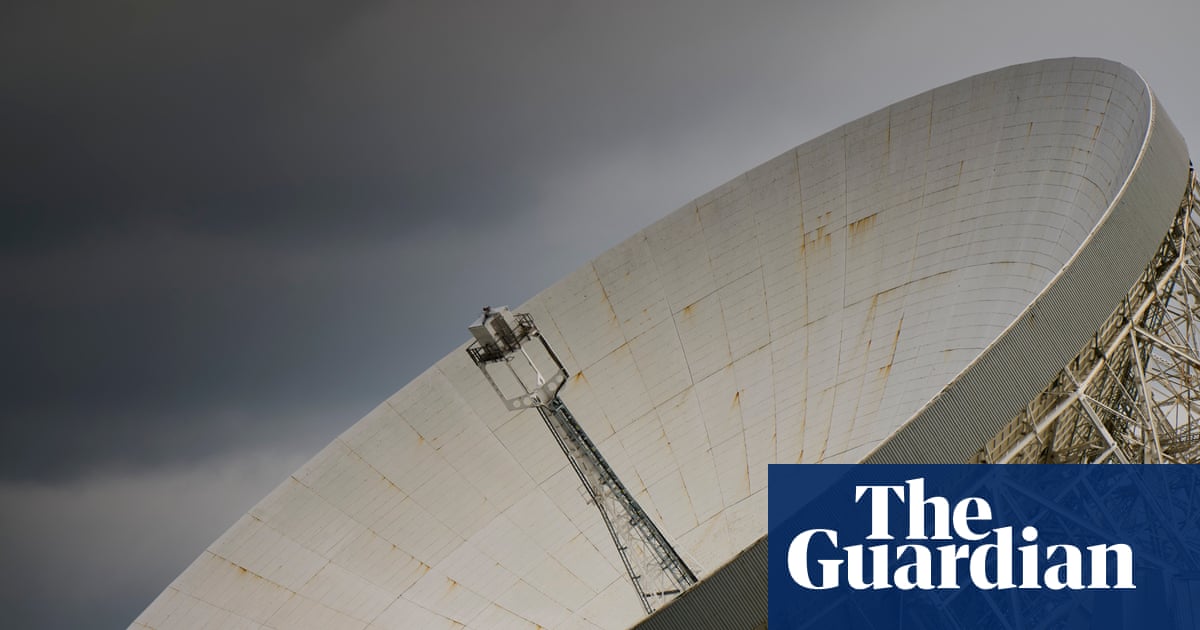
Jodrell Bank Observatory, a key site for astronomical research in the UK, is at risk of closure after the government announced significant funding cuts. Over 100 artists, writers and scientists have called on the UK government to save the facility, which includes the Grade I-listed Lovell telescope, a historic and scientifically vital instrument. The cuts, part of a broader funding reduction package, threaten to end operations at the observatory and jeopardize thousands of research jobs. The Lovell telescope, which tracked the launch of Sputnik in 1957, is central to a global project mapping the first billion years of the universe. The move has sparked concern among experts, who argue that the decision undermines the UK’s scientific leadership and global reputation.
Scientific and cultural loss from funding cuts
The funding reductions, announced by the Science and Technology Facilities Council (STFC), have led to a 45% cut for the Next-Generation Transit Survey, which searches for solar systems similar to Earth’s. The e-Merlin network, a key component of the UK’s national radio astronomy facility, is also set to lose funding when its current agreement ends in March 2028. The STFC cited cost overruns, rising electricity and staff costs, and high foreign exchange rates as reasons for the cuts. However, critics argue that the decision is “foolish and shortsighted,” as the observatory plays a crucial role in tracking space debris, solar flares, and asteroids. The Lovell telescope, a UNESCO World Heritage site, is also at risk of being left unused, with the letter to the government warning that its closure would be a “poking out of some of the world’s clearest eyes on the sky.”
Impact on research and employment
The funding cuts are expected to result in about 800 job losses across the scientific community, with the observatory itself facing the loss of 28 jobs. Nearly 3,000 researchers who work at the facility could also be affected. The letter to the UK government highlights the importance of Jodrell Bank as a hub for international collaboration, including the Square Kilometre Array Observatory (SKAO), which has its new headquarters at the site. The observatory also hosts the UK’s largest radio telescope and is a key player in global astronomy. The cuts have been criticized as a blow to UK astronomy, with some arguing that the decision undermines the country’s scientific capabilities and international standing.
The decision threatens the UK’s leadership in scientific exploration and global reputation. The letter to the government calls for immediate funding to ensure the observatory’s services continue without interruption. The STFC has stated that it has undertaken a rigorous prioritisation process to focus investment on the areas that will deliver the greatest long-term scientific capability, impact and value for the UK. However, the letter argues that the cuts are short-sighted and threaten the UK’s leadership in scientific exploration. The decision also raises concerns about the future of the SKAO, which relies on the Lovell telescope for its research.
The loss of Jodrell Bank could have long-term consequences for the UK’s scientific community. The funding reductions are part of a broader trend of cuts to scientific infrastructure, with other projects such as the Rubin Observatory in Chile also facing reductions. The loss of Jodrell Bank could have long-term consequences for the UK’s scientific community and its global reputation in astronomy. The debate over funding for scientific research continues to grow, with calls for a more balanced approach to investment in science and technology.