
International hotel chains expand into China’s midscale market to attract value-driven travelers
International hotel chains target China’s budget-conscious travelers with new midscale brands.
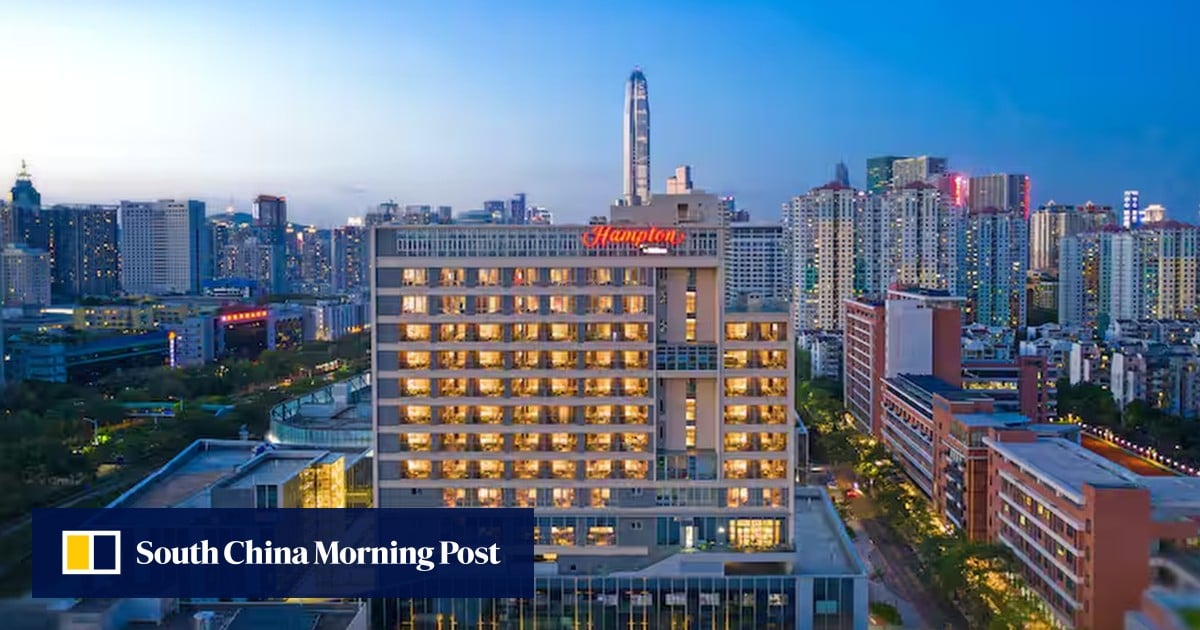
International hotel chains are increasingly targeting China’s value-driven travelers by expanding into the midscale and upper-midscale segments, a strategic move aimed at capturing price-conscious consumers without diluting brand positioning. This shift reflects a broader trend as domestic and international players compete for a growing segment of travelers who seek affordable yet reliable quality and local experiences. In a market where average spending per trip has slightly declined, international brands are leveraging their global recognition to offer more accessible options, as seen in the case of Ryan Liu, a 24-year-old who recently discovered the affordability of a Hilton hotel in Shenzhen.
Strategic expansion to meet changing consumer demands
As domestic consumer spending in China remains under pressure due to a prolonged property downturn and a sluggish job market, travelers are increasingly prioritizing value for money. This has prompted international hotel groups to reposition their portfolios, introducing more affordable brands that cater to this demand. For instance, Hilton’s Tempo by Hilton, launched in 2020 as an “approachable lifestyle brand,” is set to debut in mainland China, with plans to expand its presence in cities like Xiamen, Beijing, Chengdu, and Jiaxing. Similarly, Marriott has introduced its Series by Marriott brand in China, focusing on converting existing hotels into its operating system and loyalty network.
International brands are adapting to a new market reality where affordability is key. Ryan Liu, a recent graduate who recently received his first paycheck, chose a weekend getaway in Shenzhen to celebrate his new job. He was surprised to find a Hampton by Hilton hotel, part of Hilton’s upper-midscale portfolio, for about 600 yuan (US$89) a night. The room came with a small balcony overlooking Shenzhen Bay, with Hong Kong across the water. “I didn’t know Hilton could be this affordable,” he said, having assumed international hotel brands were beyond his budget.
Local competition intensifies in the midscale segment
While international hotel chains are making inroads into the midscale segment, they face growing competition from domestic players such as Atour and H World, which have established strong local networks, membership bases, and efficient operating models. These local brands have already built consumer loyalty and operational advantages, making them formidable competitors. Zhou Mingqi, founder of Jingjian Consulting, noted that international brands traditionally benefited from their brand premium, but this advantage is diminishing as they move into more affordable segments.
Domestic brands are already well-positioned to challenge international players in the midscale market. According to Zhou, moving into the midscale and upper-midscale segments represents a bet on the more affordable end of the market for international hotel groups – whose portfolios have traditionally focused on upscale properties – without diluting their brand positioning as these companies seek to capture more price-conscious consumers. Hyatt has also entered the market through a partnership with Chinese hotel group Dossen, aiming to develop its Select brand in China. Meanwhile, IHG has opened its first Garner hotel in Beijing, offering rates of about 500-700 yuan a night.
Despite the challenges posed by domestic competition and economic pressures, international hotel chains continue to expand their footprint in China, betting on long-term growth potential. Their strategy of leveraging brand recognition while adapting to local market conditions highlights the evolving dynamics of the hospitality industry in one of the world’s largest and most competitive tourism markets.