
Singaporeans redefining faith: labels fade, beliefs persist
Singaporeans are redefining faith, with many dropping religious labels while still holding spiritual beliefs.
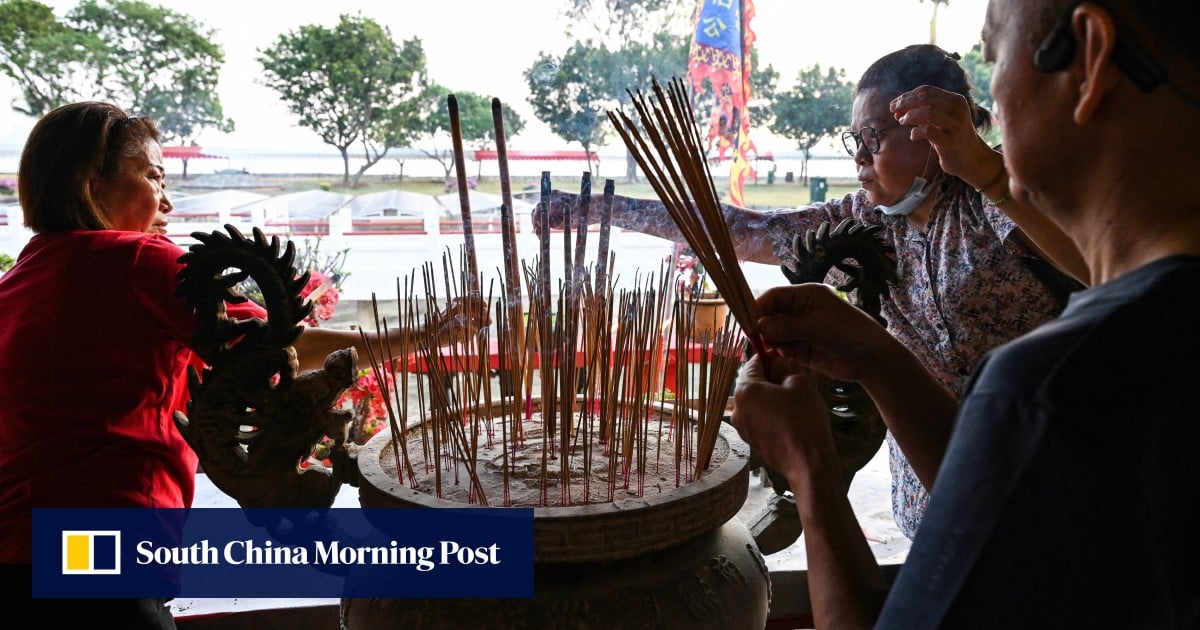
Shifting identities in a pluralistic society
Singapore, a city-state renowned for its religious and ethnic diversity, is witnessing a subtle but notable shift in how its residents define their faith. A recent government survey revealed that the proportion of Singaporeans aged 15 and above with a formal religious affiliation has declined from 83% in 2010 to 76.1% in the past year. This trend, analysts suggest, reflects broader cultural changes in one of Asia’s most pluralistic societies. While Buddhism, Christianity, Taoism, and Islam all saw declines in affiliation, Hinduism remained the only faith to increase, rising from 5% to 5.4% over the past five years.
From belief to personal philosophy
For many Singaporeans, the decline in formal religious affiliation does not equate to a complete loss of faith. Instead, it signals a shift toward more personal and fluid spiritual outlooks. Ashley Wong, a 26-year-old marketing executive, described her experience with Christianity as one of detachment, where prayer offered no solace. “I’ve just never felt connected to any religion,” she said, though she remains open to spiritual experiences. Similarly, Melanie Tiong, a 26-year-old tutor, initially distanced herself from Taoism but later found comfort in prayer after a personal crisis. “It’s a lot more comforting to believe that there’s a higher power out there making or letting things happen to you,” she said.
Religious practices persist, even without formal affiliation.
Despite the decline in formal religious affiliation, many Singaporeans continue to engage with spiritual practices. Some attend church during holidays or visit temples for cultural events, while others draw inspiration from Buddhist and Taoist teachings. This fluidity in religious identity reflects a broader societal shift, where faith is no longer seen as a rigid label but as a personal and adaptable experience.
Belief without boundaries
Among the unaffiliated, a significant portion still holds spiritual beliefs. A 2023 Pew Research Centre report found that 87% of Singaporeans believe in God or unseen beings, a higher proportion than those who identify with a specific religion. About four in 10 of the unaffiliated said they believe in God, while more than half believe in unseen beings. This suggests that many Singaporeans are redefining faith not as a fixed label, but as a personal and evolving experience. Aircraft engineer Sumar Kurya, who grew up in a Hindu household, now identifies as culturally Hindu but philosophically unaffiliated. “While my cultural identity remains Hindu, my philosophical outlook has no fixed label,” he said.
Secularisation and cultural adaptation
Jack Chia, a professor of Buddhist studies at the National University of Singapore, noted that secularisation—defined as the decline in the social significance of religious practices—is not unique to Singapore. Similar trends have been observed in Japan and South Korea. However, Singapore’s religious diversity sets it apart. “There is no institutional or legal stigma attached to non-affiliation,” said Erica Larson, a senior research fellow at the National University of Singapore’s Asia Research Institute. Yet, she acknowledged that individuals may still face pressure from family or religious communities.
Religious identity as a fluid concept
The growing number of Singaporeans identifying as unaffiliated reflects a broader cultural shift. While some may still attend church at Christmas or visit Taoist temples during Lunar New Year, others are less involved in religious institutions and view faith more as a personal experience. This fluidity in religious identity suggests that Singaporeans are redefining faith in ways that align with their evolving personal and cultural contexts.